My Student Leadership Experience – Clare Daniel

The Leadership Academy experience at Swansea University has been an extraordinary journey.  One that has sparked passion, commitment, and curiosity. Leadership is quality that is not confined to CEOs or managers alone, but something that can be cultivated by anyone willing to take on the responsibility of leading. In this blog article I will explore the essence of effective leadership that I personally experienced with my mentor and with other individuals.  Below are some examples of my own findings after spending time with Hazel Powell and several other individuals who are leaders in their field.

I was very lucky to have been matched with Hazel Powell and listened intently to her presentation of supporting and initiating the training for overseas nurses.  Hazel is inspired by equality and diversity and is empowered to helping and nurturing them to train and integrate them into our culture.  I, like Hazel, am also empowered by equality and diversity and feel very strongly about supporting the journey of neuro diverse medical students into the NHS workforce.  This is something close to my heart, and together with my teaching background, the SLA has inspired me to pursue this venture further.  Hazel and I visited the training suite for the overseas nurses, and it was one of my most favourite experiences of the SLA.  These nurses leave their homes, family, sometimes young children.  They are already qualified in their fields yet undertake a rigorous training course along with several forms of inspections and examinations before being signed off to work in Wales.  They were so resilient and faced much adversity.  They were some of the most inspiring people I have ever met and felt a huge privilege of meeting them.

I have been invited and exposed to a variety of areas such as suicide prevention, meetings with HEIW, Clinical audit visits, Quality and Assurance meetings, I have been connected to areas such as PALS team in Morriston Hospital, Care after Death team, palliative care nurses, to which I now undertake bank work.  I am in contact with the “Arts in Health” team and digital stories.  I have experienced perspectives from social workers and Occupational therapists.  I am awaiting to experience and organise a placement with QI and a visit to Ashworth, along with the health hand safety team at the “Welsh Risk Pool”. 

I have also been in contact with the Bacteriology department to gain an insight in this field and experienced a day with a diabetic nurse to expand my knowledge in this area.  I am currently in contact with a nurse researcher who I hope to have a placement with to gain further insight into this role, as this is something that I would like to further explore.

  1.  Vision and purpose:

At the heart of leadership lies a clear vision and purpose. Great leaders possess the ability to articulate a compelling vision that inspires and motivates others. They have a deep understanding of their purpose, and they communicate this with authenticity and passion. A well-defined vision sets the direction and act as a guiding light, enabling the leader and their team to navigate challenges and make informed decisions.  I felt this very early on with Hazel, after being inspired by her presentation at the Leadership Academy.  Hazel was very open and honest about her own experiences and journey, and very engaging and supportive when answering questions, I had.  Another experience through the SLA I was privileged to meet Kimberley, an individual who had, in recent years, set up the “Care After Death Team”.

Kimberley was an absolute inspiration and her dedication to set up this phenomenal service and nurture and grow it, was absolutely awe inspiring, and rooted from her very own personal experiences within the NHS.  Kimberley was a rare individual and the NHS are extremely lucky to have her.

  •  Emotional intelligence:

Emotional intelligence distinguishes exceptional leaders from the rest. Leaders who possess high emotional intelligence have a heightened awareness of their own emotions and those of others. They are empathetic, understanding, and skilled at building relationships based on trust and respect. By acknowledging and effectively managing emotions, leaders can foster a positive and inclusive work environment, enhancing collaboration and productivity.  Whilst being on several meetings that Hazel chaired, I was in constant awe of her absolute determination and openness to support individuals and teams with ideas on how to improve services.  She was so supportive of trialling and testing new ideas to constantly want to improve services within the NHS. 

  •  Effective communication:

Clear and effective communication seems to be cornerstone of successful leadership, and something that has been highlighted to me on numerous occasions during my time at the SLA.   Leaders were skilled at conveying their vision, goals, and expectations to their team members. They listened attentively, sought feedback, and provided constructive guidance. The open and transparent communication helped to foster a culture of trust, encouraging innovation, and ensuring that everyone was aligned and working towards the same objectives.

  •  Adaptability and resilience:

It was evident on many occasions that I witnessed adaptability and resilience. By remaining flexible and open-minded, leaders can navigate uncertainties and inspire their teams to thrive amidst adversity.  Hazel was resilient and lead by example, demonstrating courage and perseverance, which evidently empowered others to overcome obstacles and achieve greatness.

  •  Empowerment and delegation:

Hazel and many individuals I met understood the importance of empowering their team members and delegated responsibilities effectively. They recognised individual strengths and talents, and they provide opportunities for growth and development. By empowering others, leaders create a sense of ownership and foster a culture of innovation and collaboration. Effective delegation allows the leaders to leverage the collective, enabling them to achieve successful outcomes.

  •  Continuous learning:

From my experiences, I have realised that leadership is a lifelong journey of growth and learning. Great leaders are committed to their personal and professional development. They stay curious seek new knowledge and embrace feedback and constructive criticism. By continually expanding their skills and perspectives, leaders can stay ahead of the curve and inspire their teams to do the same. They lead by example, encouraging a culture of continuous learning within their organisation.  For my personally, I am constantly curious and felt privileged to meet individuals who have inspired me and have helped nurture my growth and confidence.  I am very eager to experience as many different experiences as I can, purely to get to know the service as a whole and to understand the microsystems that work within it.

 The SLA has taught me that leadership is not about holding a position of authority; it is about inspiring others to achieve their full potential. I have witnessed clear vision, emotional intelligence, and excellent communication skills. I have seen adaptability, resilience, and empowering team members. Leadership is a journey that requires continuous learning and personal growth. By embracing these principles, I feel I can proceed and unlock my true potential and move forward, embracing each opportunity as a learning experience and I am determined to never lose my curiosity.  I look forward to continuing my journey with leadership and feel utterly privileged to have met the people I have through the SLA.  I hope to always be reach out to them for future support and growth. 

I have loved every minute of the SLA experience and encourage anybody thinking of applying to do so.  I also recommend those who apply to go after what inspires them, what they feel passionate about and if they have a vision of where they wish to go, or what they would like to improve in themselves is to reach out and make those connections. Use this opportunity to you advantage, and don’t waste a second.  Embrace it all.  Good luck!

My Emotionally Intelligent Leadership Journey – Andrew Lelliott

“Andrew, do you see the way that you work with your patients?”

When I was a Health Care Support Worker for a Community Mental Health Team, I would never had known, that a short conversation in 2015, with a psychotherapist colleague, would send me on a journey of self-exploration and personal and professional development.

Having been told by my colleagues that when working with a patient, I would look at the patient’s journey, how they got to the situation they were in, showing compassion, true empathy and that I was in touch with their emotions. For me, I was under the impression that everyone worked in this manner. I was advised, that I should look to explore what opportunities were out there to enhance my learning and also guide me into putting theory behind my therapeutic practice.

This lead me to initially complete a 10 week counselling taster course with Swansea University, to then funding myself to take up a 2-year Higher Education Certificate in Counselling skills. On completion of this, I had developed my self-awareness, personal growth, self-acceptance and my personal beliefs about myself and others.

Fast forward 3 years to 2020, where I applied for the part-time BSc in Adult Nursing, which I was successful. I was a few weeks into the course, when one night, I was casually reading through a book called “A Handbook for Student Nurses” (Benbow & Al, 2019). I came across a page in the book titled “Emotional Intelligence” and that is when it all clicked and where my journey with emotional intelligence really took off. I had never heard of the term emotional intelligence, but within this one page in this book, I totally understood everything it was about.

In the short piece within the book, it defines emotional intelligence (EI) as the capacity to perceive, evaluate, and effectively handle our own emotions as well as the emotions of others. Then goes on to break EI into four key areas – Self-awareness, social awareness, self-management and social skills, which mirrors Daniel Goleman’s key ideas in his book “Emotional Intelligence, Why it can matter more than IQ”. In relating to this small, one page chapter, I recognised that I was always in tune with my own emotions, my strengths, weaknesses, values and what motivated me. As well, as this, the management of my own emotions, impulses and reactions in maintaining an emotional balance.

At around the same time that I had read the small chapter on EI, I had an online lecture called “Leadership and the Self” with Beryl Mansel. To tie in with the lecture, we were given a “Leading the self” workbook, which was based on developing self-awareness. Within the workbook, the idea that self-awareness is an understanding of a person’s own strengths, weaknesses, and the differing aspects of the self. The workbook also covered how a person can look into their self and grow an awareness of their strengths and limitations, can lead to a person acquiring the insight and skills needed to be an effective leader. This got me reflecting and recognising my own strengths and weaknesses. I was aware that I was a good communicator, adaptable, honest and passionate in the development of others but areas to work on were self-confidence and self-belief. After the lecture I spoke to Beryl about my interest in Emotional Intelligence and how could I look into developing it. Beryl advised me to apply for the Student Leadership Academy (SLA) at Swansea University, which is a programme aimed at students who aspire to lead and make a difference. A key aspect within the SLA is gaining confidence in a person’s skills and an increase in self-awareness. This seemed the perfect programme to understand my strengths and enhance my emotional intelligence.

I spent the week perfecting my SLA application and then the next couple of weeks, nervously waiting to see if my application was successful. When I got the email stating that I had been successful in my application, I was over the moon. I knew I there would be the opportunity to meet likeminded individuals like myself and build strong networks.

Due to covid, the initial 2-day leadership conference was held online. It consisted of motivational speakers from varying health and social care and education backgrounds, interactive group sessions and the opportunity to network. Of the phenomenal calibre of guest speakers, one that stood out for me was Nicola Davis-Job, who is the Acute Care and Leadership Adviser for the Royal College of Nursing Wales. Her presentation on ‘Leading with Emotional Intelligence’ really resonated with me personally, when she talked about resilience, grit, motivation and optimism. The areas that Nicola talked about validated my own characteristics, as an optimistic motivating individual, not only with the patients in my care, but the people in my close circle around me.

As part of the SLA, the delegates were given an Emotional Intelligence Workbook and within the workbook, it discussed how developing the four areas of EI (self-awareness, Social awareness, self-management and relationship management) would lead to becoming more productive and successful in what we do. I could relate to my own ongoing development in these four areas, which has led to a reduction in stress in my personal, work and university life and helped improve the relationships within these areas. Towards the end of the workbook, it listed “Ten habits of emotionally intelligent people” and within these ten habits were two, which really resonated with me personally. Showing respect for and validating other people’s feelings, was something I had always done naturally. When seeing this in the EI workbook, it validated my own empathic ways of being and having and understanding and acceptance of individual’s feelings. Respecting and validating people’s feelings, wasn’t just aimed towards the patients I cared for, but also with the people in my personal life.

Reflecting back on my time leading up to the SLA, I was able to recognise my own elements of emotional intelligence through reading literature. However, I had not been able to fully gauge all aspects of EI, and taking part in the SLA, helped me go deeper into recognising other areas of EI in myself and adapt a growth mindset, surrounding EI. The SLA guided me into realising the importance of EI and leadership, especially in health and social care. The idea that in the workplace, a leader who possesses the ability to regulate their own emotions and demonstrate empathy towards others, will exhibit greater effectiveness. Going forward in my own leadership journey within the health service, I can now acknowledge the importance of the ongoing development of my own EI, through dedication and self-reflection.

At the time of writing this and completing the SLA, I have gone on to successfully complete the national 150 Leaders student leadership programme which is run in partnership between the Council of Deans of Health and the Burdett Trust for Nursing. Furthermore, I was invited back to the 2023 SLA, to deliver a presentation to the new delegates on my experiences on the 150 leaders programme and co-present a presentation on “Developing your Emotional Intelligence”.

By stepping outside my comfort zone and continuing to develop my emotional intelligence, I am truly excited to see where my leadership journey takes me.

References

Benbow, W., & Al, E. (2019). A handbook for student nurses : introducing key issues      relevant.for practice (3rd ed.). Lantern Publishing.

Goleman, D. (1995). Emotional intelligence: Why it can matter more than IQ. Bloomsbury.

Steve Gutzler Leadership Keynote Speaker and Executive Coach. (2013, April 1). Steve Gutzler. https://www.stevegutzler.com/

My journey in leadership – Tesni Amos

My journey in leadership throughout the Student Leadership Academy 2023 has been an incredible one.  

The first conference, on the 9th and 10th of March, was a strong start to the whole process – from getting to meet a lot of like-minded students, to getting to witness great talks from extremely senior members of staff (Chief Executive Welsh Ambulance (NHS) Trust Jason Killens). While the talks and networking with staff was very useful and genuinely interesting, to be able to connect with my fellow healthcare students was also a great aspect of the Academy. Throughout my general university life, I have ample chance to socialise with other student nurses, but unfortunately have had little time nor opportunity to engage with students of other healthcare degrees. However, in the Student Leadership Academy there was a large mix of students. Nursing students were well represented, but there was also midwifery, paramedics, neurophysiologists, and occupational therapists.  

The first two days set up how the rest of the experience would go – encouraging me to think about what truly matters in a great leader, and how these key aspects in the good leaders around me utilize these to give their staff and patients the best possible working and healing environment.  

One challenge that students were asked to think about before returning for the second and last part of the Academy was an achievable change that Swansea University could implement to improve the student lives. The group that I was in decided to go with my idea of a society catered towards all healthcare students – created with the goal of uniting students across the boundaries of degrees, making life-long friendships that would benefit the student in university but additionally once working together in the NHS. Our group the “HealthSoc Committee” then committed to starting a presentation to be shared on the final day of the Academy.  

The next stage of the Student Leadership Academy was the coaching scheme, which involved one-on-one meetings with senior members of different aspects of healthcare organisations in the UK to speak about leadership and learn from one another. The coach that I was paired with was Simon Cassidy, a member of staff in Health Education in Wales. Simon was always incredibly pleasant to me and enabled me to feel comfortable to ask him continual questions about his experiences whenever we met up over Zoom. This was around once every month from April to September 2023 – which may have been slightly more than other students met with their coaching mentors! Simon and I had a good relationship over our chats, and so he invited me to speak at a HEIW conference with four other students from across South Wales.  

With some students from Cardiff University, Open University, University of South Wales, I was proud to be able to represent Swansea University by my lonesome. On the 24th October 2023, in my speech to a crowd of around 100 people, each with their own years long experience as a nurse, I spoke about the future of nursing as it seems to students, mentioning the negative press surrounding nursing (potentially turning away future needed nursing staff), and the positive way I had been treated by multiple staff members on placement ensuring my enjoyment.  

As I was going first of the group, I was quite nervous, but persevered. I got through the speech – hopefully with mistakes to a minimal! Some audience members were also kind enough to come to the students’ table after the event and congratulate us all on our speeches. A comment made by a sister stuck with me – that our talks reminded her “of what it was like to be a student and to have that ambition and drive to improve”.  

With positive reviews on the day and on the internet afterwards, I was feeling grateful that the Academy enabled this opportunity to come to me – but that was not the end of positive effects from SLA!  

The final day on the 7th of July came upon me fast. The “HealthSoc Committee” group had been preparing for the presentation, and we had organised a survey for healthcare students to undertake – with full approval from the SU research ethics team. We did not anticipate the response, with over 140 responses from many different healthcare degrees. This encouraged our team, as it showed a real gap in the SU experience and incredible preliminary interest in the idea, and through this survey process we gained valuable advice and knowledge from multiple senior staff members. We then presented in front of staff and students, an experience which helped me build my confidence in my presenting skills. The feedback we received was exceptionally positive and made me thankful for the work that my group and I had put in, all supported by the skills garnered from the Student Leadership Academy. As a direct result, we now have a healthcare society, of which the majority of committee are SLA members of 2022/23.  

The final opportunity that I can thank the Student Leadership Academy for is meeting hosted by HEIW staff with five other students online, of which I was the only student from Swansea University, and additionally the only student studying Adult (General) Nursing.  

It was in this meeting I got to learn about how HEIW is planning to recruit nursing staff, and the future of nursing from their perspective – as well as share my own thoughts. The topics ranged from AI to decentralisation. Throughout I was honoured to get an inside look at how nursing could look in 10 years time – a chance earned through SLA.  

When I first applied to attend the SLA, I was not expecting to be given these great events throughout the year – but as I have I would encourage everyone to give the Student Leadership Academy application a go. You may just get through and open yourself up to improving yourself with leadership skills, and incredible networking opportunities in which you make stable and lifelong relationships!  

How leadership has shaped my personal life and professional career – Toni Evans

As a mature student I thought I understood leadership. I didn’t! It was only when I participated in the Leadership Academy, my knowledge began to grow and gave me the confidence to believe in myself. 

Leadership isn’t about being the loudest in the room, it is about active listening, self-awareness, communication, and collaboration, along with many more skills. I always knew I had some of these qualities but never really knew how I could develop them further and if I even had the ability to do so, but Beryl and her lovely team made myself and the rest of the room believe that we could. 

Attending the leadership academy was a little out my comfort zone, but being in a room full of leaders, I really had nothing to be worried about. Listening to motivational speakers, working within teams, and enjoying learning about myself and the type of leader I am and how I could enhance those skills that I already had. Being apart of the leadership academy also taught me self-awareness of my own traits and what I wanted to learn, grow, and how I wanted to empower other people with this knowledge. 

My name is Toni Evans and I am soon to be a year 3 student mental health nurse. Something that I am very passionate about and I am always looking for new ideas to put into clinical practice to make sure our lovely service users are receiving the best care possible and I believe the newly found leadership skills I have devloped will help me achieve this. 

Here are a few examples of how I can achieve this: 

Communication: 

Active listening is one of the main components that I believe makes a good leader. It is about being able to give someone your time to fully concentrate on what you are being told, to understand them and to respond to them. Ive also learnt it’s about being respectful to others. 

Empathy: 

Empathy is a vital skill all leaders will need to adopt. It is about being able to build trust, understand and inspire others.  

Collaboration: 

Collaboration skills are just as important as any other skills in leadership. Having the ability to be able to work well with others but it is also about sharing the responsibility and decision making. 

Those are just a few examples of different skills that a leader may have. Most people reading this will already have those skills, but for me, it was about learning how to develop those skills and apply them. 

Attending the leadership academy has taught me so much about the type of leader I am. I had the privilege of having our chief nursing officer for Wales Sue Tranka as my coach. It really was a dream come true. She was able to guide me and support me through my journey with the SLA. She taught me so much about myself in such a short space of time. It’s something I will never forget in my personal life and professional career. 

I had previously met Sue at another function, so was already aware of what a great leader she was, but this time, I was able to speak to her about my own leadership journey. 

Keeping in touch with Sue didn’t end there……I was also asked to attend the chief nursing officers conference in Cardiff in October 2023 as a guest speaker about my own personal journey with mental health. It was the most surreal experience that I have ever had. I was in another room full of leaders, but this time it was very experienced leaders. I got to talk in front of 300 people in the room and 150 people online. Something I would never have been able to do before the leadership academy.  

I left school with no GCSE’s above a D and worked in an office for 12 years but when my own mental health journey started 5 years ago, with the professional help and my own determination, I decided I wanted to help others who may be in the situation I was in 2019. I never in a million years imagined I would be speaking at the chief nursing officers conference just a few years later, empowering other people. 

Believe in yourself and always be open to learning. 

An authentic self-leadership reflection by Natalie Griffiths

If you were to Google ‘Leadership’, you would get billions, even trillions of results in half a second. This makes it hard to narrow down and identify the elements.
So let’s make it simple; You don’t actually have to be in a chief executive position, a politician, or a manager to be a leader. Leadership isn’t about position; it is about who you are and the influence you have. Every single one of us can be a leader and make a difference in some way whether that be through paving the way for organisation, inspiring teams, or my personal favourite, creating communities. 

Authentic leadership is about turning up and being ourselves. – having a clear understanding of who we are, what our strengths and weaknesses are, and working in a transparent way to bring it all together. Through my coaching with Beryl we talked a lot about self-leadership and that in order to be a great leader, to start, you must have good self-leadership.

I have held leadership positions in many organisations and many workplaces, but it was only since joining SLA that I actually reflected on my own leadership, the traits and expectations I hold for myself and others and this brought about a self-awareness.

It’s probably time I introduced myself, for those of you that don’t know me, my name is Tilly, I’m a current 3rd year Student Paramedic and I have held a few different leadership positions in the past.

I hope you will indulge me now as I take you through a snapshot of my leadership journey, and tell you some stories, in no particular order of the leadership lessons I have learnt along the way.  

1: Take care of your team. 

So to start, lets take it back to 2003 I am 8 years old and a cub scout. Tuesday nights are my playground and I have my first leadership experience as a Sixer, which means that I am the “responsible one” for a small group of other 8-10 year olds- now I don’t know who thought that this was a good Idea as I was rather scatty back then. A highlight here was being the chief pirate on a bamboo raft race, doing a marvellous job taking care of the team, laughing and smiling despite our raft being half underwater and on the verge of sinking. 

I think my biggest worries were about making friends and making sure we were all having fun. Undenounced to me, I was building the foundation blocks of the social skills, I have used throughout my life to take care of people. I didn’t think back then, making sure my 6 all had a glue stick, and an egg would lead me here.  

2: Be open to being exposed to new experiences and new ways of thinking 

Its 2006 now, I am 11- I am a patrol leader in Scouts and I am camping in a farmer’s field in Swanage where there are no flushable facilities on this camp. The toilet is basically a bucket, with a lid, in a tent. There was a lot of confusion on this camp at the beginning- our parents had paid for us to go camping for a week and we were expected to use that?! But someone had to go first, and that person was me. There was a moment on camp where my friend accidentally dropped the last toilet roll in the bucket. But it can’t have been all that bad as I did go on to complete over 200 nights away camping in Scouts. So, the lesson here- be open to being exposed to new experiences and new ways of thinking. It might not always be as bad as it seems.  

3: Encourage growth in others 

Back in the day, roughly around 2007 I used to be a competitive swimmer. Unfortunately, or fortunately I found out about cake and didn’t carry this on. But being a swimmer led me to being able to instruct swimming as part of my Duke of Edinburgh Awards. My bread and butter was progressing children from Goldfish 3- being able to blow bubbles underwater and swim 5 meters with no feet on the ground, to Angelfish 1- jumping in the big pool and swimming 20 meters back to the wall. This might seem wholly irrelevant in the stance of leadership, but by celebrating small goals on the way to big achievements, you are encouraging growth and progression in others, and this can foster a great team environment.   

4: Use SMART targets to your advantage 

I am now 17 and beginning my career in the outdoor industry, starting as an activity instructor and then a manger. One of my favourite activities to instruct was archery. I got quite good at it with practice, and I will never forget the looks of disbelief on some teachers faces when I hit 5 arrows, on 5 balloons in the gold ,one after the other by sheer fluke in my demonstration. In archery, it’s all the about the set-up, the aim and the action. Getting teams on board and aligned is vital for success, and keeping people coordinated and aimed is a continual process. You’re the luckiest leader in the world if this happens by default. But one way to ensure people are co-ordinated and aimed, is to use SMART targets to your advantage and each success can encourage growth.  

5: Increase opportunities through community, connections and collaboration 

Another milestone in my journey was completing a degree and qualifying as a Youth Worker- Paired with my outdoor instructing background, I applied for a job in Appalachia- trekking with disadvantaged young people on the Appalachian trail, encouraging them to break down barriers, collaborate, lead, and form meaningful connections in their community through the outdoors. Sometimes this was difficult- especially when you notice a bear has been following you and your group of 12 young people for the past half an hour. But those lessons those teenagers were learning can still be transferred into our professional careers- you just don’t have to trek a long way to realise it.  

6: Listen to your colleges 

On return to the UK, I picked up one of my old jobs again- Supervisor to 50 lifeguards daily at an outdoor seasonal swimming pool, where we had a ground capacity of 3000 people.  Reacting in emergency situations was challenging, especially during heatwaves and when unexpected scenarios play out, but being able to adapt to changing situations and stay calm under pressure was at the forefront of my role, and an environment now in which I feel I thrive. This role taught me that communication is the essence of leadership, but it is listening that is the most important aspect. I know you all know how communication works- People can express feelings, pass on information and share thoughts, and in turn boost morale, engagement, productivity, and satisfaction whilst also forming meaningful relationships and communities of support along the way. Sometimes though, just like when we were all children, you have to cross your legs, put your fingers on your lips and keep your ears open as that’s the only way for any learning to begin. 

7: Develop leadership strategies and skills to lead yourself and others 

In my previous free time – though I can tell you I don’t currently have much of that. I was an Army Reservist, part of the Officer Training Corps under The Sandhurst Group. This was quite frankly the most nerve-racking thing I have ever done. This wasn’t as free spirited as my previous off the whim adventures. But the preparation for this gave me the chance to reflect and look at where I truly wanted to be. I was not only being judged on my aptitude with psychometric testing, my fitness and my personal leadership, I was also being judged on my ability to guide others and whether I had the secret golden nugget within me that was right for the role. The preparation for this for this was a lengthy process but enabled me to develop strategies and skills to lead myself and others.  

8: Be willing to be misunderstood 

My role in Scouting as an International Youth Advisor has taken me oversees- new cultures, new languages, different organisations with different priorities and ways of thinking. A prime example of this was a trip to Tunisia, with a language barrier that we hadn’t even thought about. I thought I could lead by example to help change ways of thinking and make processes better. But I realised that this was not true. People and organisations must choose to change on their own. I learnt that if I changed my approach when things weren’t working, I could inspire others to do the same. The willingness to be misunderstood and the self-awareness and ownership to sometimes take a step back, can be the best ways to help others.  

9: In order to be a great leader, you need self-leadership. 

Which brings me finally to the here and now, the SLA and the coaching that I have received. It’s been a journey. I’ve learnt that in order to be a great leader, you must have good self-leadership. There Are Big Differences Between Leadership And Management. Leadership is an art. Management is a science. Leadership is about people. Management is about things. People are unstable, but things are stable. You rely on behaviours and values to lead, whilst you use skills and knowledge to manage. Leadership is about “being.” Management is about “doing.” Understanding this difference will bring huge clarity into your day-to-day life and help you focus on self-leadership. 

I started this by introducing myself as a third-year student paramedic, but I am so much more than that. We all need to be challenged on our leadership journey to ensure that both ourselves as leaders and our colleagues can develop and achieve. People often want to lead others, but I think it starts by leading yourself, and we are all more than ready to take that step and make that journey. 

The Beauty of Becoming…by Ben Clement

I first found out about the student leadership academy when I came across @SWANSLA on Twitter. At the time, I worked full time in a mental health team, and I was completing access to a nursing course in the evenings. With the exciting prospect of studying mental health nursing at Swansea University shortly, I began making myself familiar with what opportunities were available for me at the university. When I came across the student leadership academy online, I was impressed with the options and sense of community provided for students. I have always been interested in leadership, and I’m always eager to engage in new opportunities that will help me to progress, so I knew that the leadership academy was something that I wanted to aim for. 

A few months later, I was finally a first-year mental health nursing student, and my application had been accepted for the student leadership academy. I was over the moon. Finally, after months of following other student’s leadership journeys online, I was about to embark on my own. 

During the first day of the programme, I didn’t know what to expect. I had no idea how many other students would be there or what the day had in store for us. When I first arrived, I was allocated to a table with other students from different courses, and we began chatting to one another. Everyone was really friendly, and instantly I noticed how confident everyone appeared to be. One of our first tasks was to think of a time that we have demonstrated effective leadership and the majority of students were confident enough to stand up and discuss their experiences. I had thought of some good examples from my previous job role, but slowly I began to doubt my abilities and believed that my experiences weren’t as good as others. 

My lack of confidence becomes even more apparent to me when we were set another task. We were asked a series of question, and we had to separate ourselves into two different groups, one being extrovert and the other being introvert. After everyone question, I placed myself in the introvert group. Usually, I’m a confident person, but this was new territory for me, and I was out of my comfort zone. It made me think, should I be here? Am I ready to be a leader if I can’t be confident in new situations? Overall the first day was fantastic, I met many great people, and I heard many inspirational stories. However, I couldn’t help but leave feeling like an imposter. 

I arrived on the second day feeling even more nervous than I did on the first day. All I could think about was my lack of confidence in comparison to the other students. However, it was on this day that everything began to fall into place for me. Throughout the second day, we heard many inspirational stories from different leaders from different backgrounds. Each story fascinated me, and it made me realise that everyone started in various places, and each person’s leadership journey is different. This was important for me as it made me realise that each person telling their story all had different strengths and weakness, which is how they got to where they are today. It made me realise that not everyone is born ready to be a leader……..

and if we were what fun would that be?

(Hale, 2016)

Despite the imposter syndrome that I had felt on the first day, recognising my lack of confidence was important as it gave me the perfect starting point to focus on with my coach. I left the second day feeling much more reassured, and in fact, I was excited to get started on my journey. 

When it came to meeting my coach for the first time, I was excited to get started. My coach was fantastic, and instantly we got along, I knew that things would go well. When I explained to my coach how I felt during the first and second day, she helped me understand my thoughts and feelings. From this point, we started to develop techniques that I could use during situations that made me feel nervous so that I was able to remain confident and optimistic. Throughout the coaching sessions, I developed multiple techniques that really work for me. Most importantly, I learned that feeling nervous isn’t a bad thing. The important part is learning how to control those emotions and use them to your advantage. 

We then decided that it was time for me to try these new techniques in a safe environment. Luckily, the third and final day of the leadership academy was soon approaching, but unfortunately, the coronavirus pandemic meant that the final day would be done online. I was sad that I wouldn’t get to see my fellow students in person, but doing the last day online meant that it was a great way testing my techniques without being thrown in at the deep end. 

The final day soon arrived, and it was time for me to use the skills that I had developed over the last few months. I soon started to feel nervous about speaking on webcam in front of other students and speakers, but I could utilise my new skills and turn my nerves into a positive aspect. I was able to speak confidently, and I didn’t doubt my abilities. I thoroughly enjoyed the last day of the leadership academy, and it made me realise how far I had come throughout this journey. I had learned how to harness fear and how to use it to my advantage. I had also realised that throughout the coaching progress whilst I had started off focusing on my lack of confidence, I had progressed in more ways than I could have imagined. 

Overall the student leadership academy has been an invaluable experience for me. My lack of confidence on the first day turned out to be one of the best things to happen to me. It helped me identify my needs and strengths, which allowed me to work on the areas that I needed to become the best leader possible. The student leadership academy has taught me that leaders come in different shapes and sizes with different strengths. Being dissimilar to others isn’t something to be afraid of. Instead, it’s something to be proud of. It also helped me realise that leadership is a journey and not a destination, which has helped me recognise the importance of always improving as an individual, a leader, and a nurse. The skills that I have developed throughout the student leadership academy have also helped me endlessly with different aspects of my nurse training. It has provided me with skills that I have been able to utilise on my leadership journey and becoming me. 

Ben Clement 

Student Mental Health Nurse.

References

Hale, M. (2016). Trust the wait, embrace the uncertainty. Enjoy the beauty of becoming. When nothing is certain, anything is possible. Retrieved January 12, 2021 from https://www.askideas.com/trust-the-wait-embrace-the-uncertainty-enjoy-the-beauty-of-becoming-when-nothing-is-certain-anything-is-possible/

Try, Learn, Grow, Repeat…. By Rebecca Lockyer

Being a mature student, I was not unfamiliar with leadership. I had seen, experienced and even been a part of leadership teams before starting my Mental Health Nursing Degree. When I first heard about the ‘Student Leadership Academy’ (SLA), it sparked my interest. Something different, or maybe even a chance to develop myself. However, I was hesitant about applying. After all, my priority was working and learning how to be an excellent mental health nurse, not thinking about managerial responsibilities before I had even qualified. This is where I was wrong. Speaking to previous members of the SLA put my mind at rest and made me realise even from that point that maybe leadership could be different from what I had seen or experienced before. I had seen leadership qualities so many times before in people that had inspired me. As a former teacher, I had witnessed young people in groups that had inspired and led despite there being no formal leadership title attached. I had also observed newly qualified nurses using their leadership skills in everyday occurrences, such as being vital advocates for patients in their care. I admired these people and not realised in many respects that it was their leadership skills that they were using. In other instances, I had acknowledged these skills but did not know how to, nor did I have the confidence to do the same. In this way, I saw who I wanted to be but not knowing how to get there. This is how the SLA has helped me on my way to doing that. 

There was a focus throughout the three-day workshop on compassionate leadership. This helped me realise the leadership qualities I valued the most and highlighted some of the ways this could be shown. Being honest, empathetic and authentic and genuinely taking an interest in those around you all resonated with me immensely. It confirmed to me that these attributes were vital in leadership.  There were so many examples of how the leaders in front of us on those three programme days had shown compassion in their direction, each in their way. I was inspired to find my way to do this on my leadership journey’

Loo Tzu

During those programme days, all of the leaders gave me food for thought in one way or another and realising how different each person’s leadership journey had been shaped was enlightening. I realised there are so many ways to develop my leadership skills. However, when Beryl spoke about ‘developing the ability to be assertive’, I was a little alarmed because this was something which I had never been very good at. Jason Killens (Chief Executive Welsh Ambulance Service, NHS Trust) also talked about standing up for what you believe to be right. I knew that they were not encouraging confrontation, and I could see why this attribute is necessary for leadership; however, I was not confident in doing this. It occurred to me that difficult conversations sometimes needed to be had and advocating for our patients in mental health is necessary and indeed vital (Wright & McKeown, 2018). This is where my coach Maria Anderton (Head of Mental Health and Learning Disability nursing – Swansea Locality) has helped me immensely.  I feel incredibly fortunate to have been assigned a coach through the Student Leadership Programme with so much experience and knowledge, who has been so supportive and easy to talk to throughout. Despite Covid-19 restrictions, I have been able to have online meetings with Maria on several occasions, I have shadowed nurses’ meetings, and I have had several networking opportunities.  Maria was able to further advise and guide me on leadership areas that interested and challenged me and suggested practical strategies for me to try to improve those skills that I knew I lacked. In particular, we spoke about developing my ability to be assertive in my way. Throughout our sessions, the idea of communication with others was key. Creating my own communication, building on previous concepts and adapting myself to be better was an area we focussed on. I observed positive communication in leadership meetings, which helped shape my communication from this time. 

 There were many aspects throughout the three programme days that I took away and started using immediately. These reinforced to me the kind of leader I wanted to be. Throughout the coaching with Maria, I built on my understanding and worked out how I could try to develop these on a personal level. These were like jigsaw pieces, finally coming together when I was in placement, where I realised the importance of developing my leadership qualities on a ground level. 

Whether or not I go into a leadership role is a question that cannot and does not need to be answered at this time. The things I have learnt throughout the SLA programme have helped me to understand myself and others more, build my self-confidence and will hopefully allow me to become a better mental health nurse and advocate for the patients I care for. For me, learning always has and always will be ongoing and I look forward to building on all the Swansea SLA has taught me about myself, others and leadership.

By Rebecca Lockyer, Mental Health Nursing Student.

References

Wright, K., & Mckeown, M. (2018). Essentials of mental health nursing. London: Sage Publications.

“Lead by example and with compassion” by Katie Ball

When I first applied to the Student Leadership Academy (SLA) I had little idea of what the programme would entail. I had been introduced to the programme in a brief talk after a lecture early in my first year of university. I believed it would be a good opportunity to develop some life skills but I thought little more of it until I got an email informing me that I had been accepted! At this time, I did not realise how brilliant this programme would be for me, not only in my personal development as a leader but also in meeting so many inspirational, kind and driven people that I was lucky enough to become acquainted with. The first contact with anyone from the SLA was with my ‘buddy’ (peer mentor) who was a student in the programme the year before. I was able to meet with him and discuss what the programme is about and how I can get the most from it, this meeting made me very eager to get started with the programme.

A few weeks later the day of the first meeting arrived! 

We started with some icebreakers, I quickly got to know many of my peers in the room. It was an amazing opportunity to hear these people be so open and honest about their stories to how they got to where they are today. Throughout the first two conference days, we heard the stories of many inspirational leaders in the NHS and within the university. They taught us many vital skills needed to become a leader, along with questioning our views on what a leader is. One of the biggest takeaway ideas that I learnt is that a leader is not just someone in a managerial position, leadership can be as simple as setting an example for others in the actions you take. 

One of the topics talked about was compassionate leadership, I soon realised that this is something I am very interested in. Another speaker introduced me to a quote by David Morrison which I still think about in many aspects of my life, it has inspired me to act and speak up about certain situations where I may not have done in the past. The quote is as follows

 “The standard you walk past is the standard you accept” – David Morrison. 

Although I had only known these people for two days, we had learnt so much about each other and developed through this experience together that it felt like we had known each other for years. I am lucky enough to have stayed in contact with some of the students I met on the course and am continually inspired by the amazing work they are doing as healthcare students in the community.

Once I was given my coach, I knew one of the things I wanted to focus on developing was my compassionate leadership. Unfortunately, I never got the chance to meet my coach in person due to local lockdown restrictions however, we overcame this by having all our meetings via video chat. We discussed how to implement being a compassionate leader into everyday life so that I will be able to apply these skills when on my hospital placements. My coach guided me to develop these skills by suggesting some further reading and actions I could take which have helped me develop my confidence in my skills as a compassionate leader immensely. 

Our third and final SLA meeting was held in the summer of 2020 meaning it was very different from the previous meetings due to it having to be held online. Although it would have been nice to see some of these people, I met back in March, again meeting online did have its advantages. We were able to have talks from people who lived much further away than we would otherwise have been able to, allowing us to hear the stories of people who are living and working in a different culture to our own. It was also a lovely experience to be able to catch up with some of my peers that I met back in March. In this Conference, we had an inspirational talk from the chief executive of the Welsh Ambulance Service. He spoke to us about his journey and how he has developed as a leader throughout his life, he had gone through many drastic changes to get to where he is today. The reason for this is that he believes that the way to grow is to know when it is time to move, this can be applied to an individual or and organisation. 

Since being involved in this programme I have become more self-aware and now seek and create opportunities. I now actively try to “champion” people in my personal and professional life. One way I have incorporated this into my university life is by becoming a peer mentor for a few first-year students on my course allowing me to support and encourage them to get the most out of their time in university. 

Katie Ball

Audiology Student

Confidence is Key in my Leadership Journey by Jessica Wadey

My leadership journey began when we were unexpectedly delivered a presentation on the Swansea Student Leadership Academy by Beryl Mansel at the end of one of our Anatomy and Physiology lectures. Although a few students mentioned that they had previously been given this Power point and they expressed their opinions on not wanting to join, I thought it would be a great opportunity to work on my own skills and try something a bit different. 

In the past, I have not taken the opportunities that have been presented to me. Whether that was taking part in extra-curricular activities whilst in school or just helping out. I decided that it was time to take a leap of faith and be involved. This sounded like the perfect academy to not only increase my confidence but to also step out of my comfort zone.

I’m currently studying the Radiotherapy Physics course at Swansea University and due to NHS funding, there are only a few places available on the course each year. Therefore, there are only 4 individuals on my course. This means that I am not able to develop my confidence and communication skills as much as I would like since I cannot continually meet new people. In other health courses such as Nursing, I feel like that would be possible due to the vast number of individuals on the course. Therefore, I thought this academy would provide the perfect opportunity to meet new people and start creating a network in the healthcare science community. 

On the first day in the academy, the word “networking” was repeated time and time again. At this point I really didn’t understand what networking was, let alone how to achieve it. Initially, I thought it meant to have connections with individuals in the health care system that relate to your discipline and I thought this would be very difficult to achieve since Radiotherapy Physics is very specialised. However, I was completely wrong. I have since learnt through the programme how easy it is to network, as well as the importance of networking. It has nothing to do with the individual discipline, but is to do with getting to know others. The more people you know, the more you can hear about their experiences and the more you can learn from others. Even just getting to know the other students taking part in the academy, I learnt so much about their backgrounds and reasons for choosing a healthcare course. By speaking to others, I was also given the opportunity to view scenarios from other perspectives which is important to consider when working within health care as not everyone will see things the same way. One of the quotes that really stuck with me from the online session we had is:

 “You always know something that someone else doesn’t”. 

From this, I have taken a lot of confidence. It has taught me that we can all learn from one another, no matter the age or experience of the individuals. We all have experiences that each other can learn for and will hopefully help both in practice and in life in general.

Confidence is one factor I really wanted to work on in this journey with leadership. One of the speakers at our first session told us the phrase:

 “fake it until you make it”. 

She explained that she completely agreed with this phrase and put it into practice herself. At the time, I was slightly confused by this. I didn’t quite grasp what she meant in terms of confidence. After reflecting on this session, I realised it is possible to fake having the confidence, being positive and enthusiastic in a situation by ‘playing a character’ or putting on a ‘confidence mask’. There will come to a point where, when meeting new people, it will not be a mask anymore and the confidence will be there to be outgoing with new individuals as it has been practiced so many times. I have definitely taken this advice on board and will be putting it into practice whenever I meet new people or am nervous about a situation. 

When I started this journey, I thought there was only one type of leadership. I was completely unaware of the different types and the roles that every individual can play within leadership. Through the programme, I have learnt that everyone can be a leader. You do not need to be at the top of your field, or the smartest person in the room to be an effective leader. Everyone has strengths and weaknesses and through collective leadership (leadership of all, by all, for all), these qualities can be utilised so that high quality, effective leadership is achieved. Compassionate leadership is another type that is needed within the health service, especially due to the amount of stress health care workers are under all of the time. I have learnt the four core leadership behaviours are attending, understanding, empathising and helping. To be a good leader you must be there for others. One thing that I learnt about myself through this process is that I often listen but don’t absorb the information. To be a good leader, you must listen to others in detail, understand their views and try and help as best as you can. 

Compassionate Leadership link: https://www.kingsfund.org.uk/audio-video/michael-west-collaborative-compassionate-leadership

Moving forward, I will be passing my knowledge of leadership and my experiences onto those who I meet, along with support and encouragement. Like with this programme, I will try and take as many opportunities as I can as this will push me out of my comfort zone and help with my confidence too. I will be welcoming feedback from everyone I work with as…

 “feedback is a gift” 

Individuals are giving you the opportunity to grow and develop and I will take that opportunity. I will continue to network and build on my leadership skills as these skills can always be built upon, no matter how much experience you have. I am really looking forward to what the future holds and I can’t wait to put these skills into practice. I would like to say a massive thank you to the Student Leadership Academy and everyone involved for this amazing opportunity!

Jessica Wadey, Radiotherapy Physics Student

Learning to channel the motivational feeling telling me…… I am capable of more.

By Brooke Lewis-Richards.

I can’t remember the day Beryl and Simon came into the lecture hall and told the cohort about the Student Leadership Academy, but I remember thinking that it was calling out to me. It was an inspiring journey from start to finish and I am so grateful for the opportunity and proud of myself for completing it. The leadership academy consisted of three jam-packed full days of activities, talks, problem-solving, empowering messages and personal journeys … I loved it!  Two of the three days were undertaken face to face and one Zoom meeting! None of those three days felt any different to the other despite one being an online attendance, which I think says a lot about how thought-provoking, interesting and captivating the whole experience has been. Once the three days were over, we each were given a coach from our field of study. We all had three sessions with our coach to further our knowledge and potential. I’m still in contact with mine and I now feel I just have an extra person to support me through my career journey which I am appreciative of.

As a mature student, I never thought I’d find myself at university at this stage of my life, I always assumed I would have my ‘dream job’ by now but when I finally woke up one morning realising I didn’t like the job I’d been working in for nine years, something had to change. I always knew I was capable of more it just took me a little while to realise if I don’t do it now, then when? When I applied to study at Swansea University, I didn’t expect myself to be accepted but I was, and now here I am. Applying to the leadership Academy was a daunting afternoon, I didn’t expect for one minute I’d make the cut, but it was worth a shot, right? When I received the email to say I’d been accepted I was so happy I could have cried. I knew this would be an opportunity for me to learn, build on any skills I already had and a fantastic opportunity to meet new people. 

On the first day, I was early (I’d always rather be early than even a minute late). Greeted by Deb Rowberry I was asked to find my name card and sit at that table, in that particular seat which sent my anxiety through the roof. Why had it never occurred to me I might not be able to sit next to somebody that I recognised? But within about 10 minutes of the day starting it didn’t matter. There were six of us sat at that table and I’m now proud to call them my friends. It was the best thing for me to not sit with familiar faces and that was my first lesson learnt. Simon Sinek once said ‘Life is beautiful not because of the things we see or do. Life is beautiful because of the people we meet’. It’s true, the people I have met have left a profound effect on me and we have supported one another greatly, ensuring we all got the most out of this whole experience. 

    All three days were exceptional, we heard from many wonderful and inspiring people, some familiar faces, some not, but everything each of them said spoke to me and helped me to believe that I am worthy of where I am and where I am aiming to be. 

On day one there were lots of introductions and a few icebreakers which I think helped each of us to relax, laugh, start to get to know each other and enjoy each other’s company ready for the day ahead. Emotional intelligence was discussed extensively, and I can’t say it was anything I’d knowingly thought about before that day, but it is something I will carry with me now to use effectively throughout my career. I have been equipped with the knowledge to help myself communicate effectively with myself and others, control my emotions to help me overcome challenges that come my way, enabling myself to understand them and put a positive spin on it, learning from the experience. I learnt a lot about myself when we discussed emotional intelligence and it will help me to be a better person from now on as I know to view situations from all angles first, then decide on the most appropriate route for solving or discussing issues and concerns. Do you wonder how emotionally intelligent you are? I’ve found this quick quiz online, it’s a bit of fun and may give you some insight into your emotional intelligence. https://www.verywellmind.com/how-emotionally-intelligent-are-you-2796099

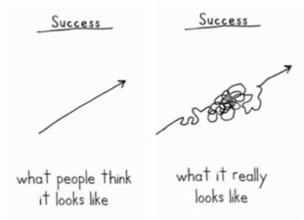
So, what do you need to be a good leader? We discussed this on day two and it was very inspiring and exactly what we needed to hear about. To be a good leader you need to have leadership values, this includes qualities such as empathy, honesty, bravery, passion and respect. The list could go on and on as there is so much that could influence an individual allowing them to become a good leader and show others how to do and be the same. I related to a few aspects of my old job and it was reassuring to know that I had learnt some worthwhile skills, meaning the time wasn’t completely wasted. Thus, relieving heavy shoulders and showing me everything I’ve done, I’ve learnt from and nobody gets to where they want to be overnight.

 I took away from that day that an authentic leader isn’t afraid of failure, they are real people who have worked hard, respect those around them and are dedicated to making a difference.

         (Blodget, 2012)

The last day of the leadership Academy took place via a zoom call due to the ongoing Covid-19 pandemic. Despite the fact we were not together in the same room, it didn’t take away any of the excitement or engagement of what the day was to hold. We were told to ‘take and provide opportunities’ which is exactly what we were doing! Taking in every ounce of information and experience that we were being let into and it was great. 

Each one of us was thriving and bouncing off each other’s enthusiasm and drive to be a better, more involved and influential leader. We heard stories of both struggle and success, each as inspiring as the other, proving that hard work, failure and learning from mistakes pays off when you have the right intentions, focus, grit and time investment. 

I thoroughly enjoyed my experience with the leadership Academy. The confidence I have in myself has grown dramatically and I know now that I will get there, it will not be easy but with the right tools, knowledge and opportunities that I take and create, I can be a great leader that will accomplish more than I could have ever imagined.

Thank you to everyone who took time out of their busy schedules to come and speak with us, to the new friends I have made who support me when I need it and to Beryl Mansel for the opportunity overall.

I will leave you with a link to my favourite leader in the world who I listen to, read about and learn from whenever I need encouraging and reminding that

I’m no different to anybody else and I’m able to do anything that I put my mind to, Michelle Obama.   https://www.youtube.com/watch?v=EIsf2p9iOsk&t=6s

(Student Leadership Academy, 2020)

References

Blodget, H. (2012, April 24). What People Think Success Looks Like Vs. What It Looks Like. Retrieved from Business insider: https://www.businessinsider.com/what-success-looks-like-2012-4?r=US&IR=T

Student Leadership Academy. (2020, July 6). Student Leadership Academy. Retrieved from Twitter: https://twitter.com/SWANSLA/status/1280054925871976448

by Brooke Lewis-Richards, Mental health Nursing Student (2020 cohort).