2 Steps Forward, 1 Step Back (But not in the way you think) by Bethan Allen

Well, well, look at that.

It only seems like yesterday I was sipping on a freshly made cuppa, nibbling on a biscuit or two (or ten!), thinking to myself, “How in the world am I meant to do this?!”.

It turns out; it was yesterday. I thought that, like I do quite often. Doubting myself has been quite a big part of my life because I never entirely fitted in with the world. But since participating in the Student Leadership Academy (SLA) and working with professionals and other students with similar goals, I’ve realised that perhaps it was the world that never quite fitted in with my ambitions. So I thought, instead of trying to change myself, I should try to change the world… OK, maybe not the world because that’s a bit daunting, but you get the picture. It sounds cliché, but it’ll make sense further on. This video was shown to us during one of our sessions and, it was good food for thought…

SLA Students learning about Resilience

When it came to applying for a place in the SLA, I was yo-yo-ing between clicking submit and just deleting everything, shutting my laptop down and throwing it out the window. I chose the former, but I’ve been close to the latter more times than I can count. And, wow, I’m glad I clicked submit! That was my first step towards actively developing my leadership identity, although I didn’t know I needed it until the Academy started. Without the SLA, I wouldn’t have seen how much potential I have in terms influencing others to start believing in themselves. Not quite the world, but perhaps those closest to me, those I think may need a little push. Of course, before that, I had to learn to believe in myself first, which was not an easy feat. At all. However, being amongst professionals, current and past SLA students, lecturers and,, guest speakers gave me a boost in confidence. We were all there for many reasons; some were shared; others were more personal. But there was one recurring theme – leadership, of course! Seeing how different people had similar goals to me, wanting to make a difference, not just for myself but also for others, reassured me that I wasn’t alone in wanting to help myself and others see the world and themselves a bit differently.

     I learned that I was behaving and thinking like a leader when doing some everyday tasks and interacting with those closest to me. Leadership isn’t wholly about taking control, and all of a sudden becoming the leader of the pack. It’s quite the opposite. A lot of it is quietly mulling over difficult decisions, alone or with others; showing compassion towards and advocating for others; gently encouraging others to pursue their wants and needs; guiding peers; mentoring someone younger than you; giving an insecure or fearful person some of your time. Leadership isn’t about showing off or being the lone wolf and doing everything on your own. A lot of the time, showing people that you can be vulnerable, have your struggles, and are not ashamed about leaning on others for support is the right way of inspiring someone to seek help for the first time or gently encouraging someone to pursue their dream career.

     It is hard. It’s not going to happen over-night. This is only the start of my leadership journey, and I feel it will continue for quite a while longer. This explanation has only scratched the surface of what the SLA can do with and for you. There are so many ways that leadership is shown and experienced – figuring out my way of leading and leadership was yet another step forward. Recognising how I best showed and practised leadership without even knowing it helped me understand how I tick, personally and professionally, to develop my strengths and nurture my weaknesses (which would help me become a better nurse). I’ve figured my leadership style is through showing compassion and, on occasion, putting myself first when I need to when I’m exhausted or anxious. I’m also open-minded, which helps me explain certain things to people, guiding them towards a better understanding of this ever-changing world.

Creative mind maps on emotional intelligence

So, I’d taken a step forward by simply applying for the SLA and another step forward for recognising and learning what my leadership style is. Now, you might be wondering how and why I took a step back. Well, to figure out my leadership style, better myself and write this entry, I had to take a step back (sometimes, a leap) to realise my ambitions in simpler terms. I had to step back to reflect and process experiences and feelings. This is called emotional intelligence – two words, but A LOT of meaning. Check it out yourself here! Being someone who suffers from a diagnosed anxiety disorder, delving deep into my thoughts and emotions isn’t hard. Still, instead of seeing this as such a negative thing, I’ve tried very hard to see my anxiety in a brighter light. And it’s not perfect, but I’ve been able to use my own struggles to lead those in the shadows (the place I used to hang out before ‘befriending’ my anxiety) out into a different light. Especially as I’m training to be a Mental Health Nurse, this has allowed me to make meaningful connections and look out for those who may be struggling in silence. So, although taking a step back may seem like a negative thing that slows you down, sometimes it’s necessary, especially now during the pandemic. Taking a step back is nothing to be ashamed of, but it’s also something that doesn’t have to be done alone.

“a LEADER is one who KNOWS the way, GOES the way, and SHOWS the way”

John C Maxwell, American leadership author and speaker.

I genuinely enjoyed the sessions the group and, I had together. Although our last meet-up was via Zoom, the rush of ideas, inspiration and camaraderie were still felt, despite the digital barrier. The lively discussions, the relaxed vibe which filled the room (and Zoom!), all the ideas and ‘lightbulb’ moments… We were unstoppable! We ARE unstoppable! And so, I will finish this entry off by saying that honestly, there’s nothing better than a nice cuppa and a biscuit- I mean, a nice chat with others who are driven, just as you are, by the passion and insight of a good leader.

My cuppa and a biscuit! 

And, “Why should I be one of those leaders?”, I hear you ask…

Well… Why not?

Bethan Allen (Mental Health Nursing Student)

My Ongoing Leadership Journey by Gabrielle Copp

I first heard about the Student Leadership Academy (SLA) in one of my lectures a few weeks after starting my nursing course. I remember thinking it sounded great, but I did not consider myself a ‘natural leader’ I did not believe it was for me. However, I went away and had some time to think about applying and realised it would be a good opportunity to push myself out of my comfort zone and decided to apply to the programme. A couple of weeks later, I had notification that I had been accepted! I was both nervous and excited for what was to come as I had a chance to read through the programme’s timetable and it sounded great.

 Before I knew it, the time had come for the first full day. I remember walking into the room to lots of unfamiliar faces and feeling apprehensive as I approached my seat. The day started with some icebreakers and activities that allowed us to feel more relaxed and at ease. I enjoyed getting to know my peers and listening to what had led them here. 

On the first day, we discussed Emotional Intelligence, a subject that I never heard of before, but will now carry throughout my future career. This knowledge has allowed me to communicate effectively with others and has helped me understand how to control and manage my own emotions. This now allows me to overcome the challenges that I face in my personal and work life by looking at challenging situations with a positive outlook. 

‘Nurse leaders should harness the power of emotions to influence others to achieve excellent care’ –  Mansel & Einion (2019).

After this discussion, we all had a lovely lunch and chatted some more to one another, which was really enjoyable to hear about other courses and experiences. 

In the afternoon, we then had a chance to sit and listen to inspirational stories and journeys from varied individuals. I remember being in awe as I sat and listened. When the day came to an end, I remember feeling so excited about what else was to come! I could feel my confidence already starting to grow, which is something I wanted to achieve out of this journey. 

‘Believe you can and your halfway there’ – Theodore Roosevelt.

On my second day, we spoke a lot about leadership values and authentic and compassionate leadership, again an entirely new subject for me. I discovered the different types of leaders and was so inspired to learn that a leader is not just there to tell people what to do, but is there to support others whilst showing compassion, honesty, respect, and passion for making a difference. We ended our second day by writing messages about our peers in our take-home boxes- I thought this was such a lovely thing to do as it left us feeling so positive for what was to come.

As I was leaving Beryl informed me of who my coach was going to be…. Professor Jean White- Chief Nursing Officer of Wales.  I just remember thinking… oh wow what an opportunity! However, little did I know the world had other ideas as Covid-19 took over, and everything changed. 

Instead of meeting with Jean face-to-face we set up our first Skype meeting in early April, to say I was nervous would be an understatement, but I did not have to be she was so great, and I instantly felt relaxed when talking to her. I felt privileged to have had this opportunity and appreciated Jean taking time out of her busy schedule during a global pandemic.  

From these skype meetings, Jean spoke to me about her life and her leadership journey. She helped me to discover my personality type and how this would affect performance and leadership. Jean helped me gain confidence and taught me how to impart information by speaking up and contributing to discussions. We discussed various topics and situations such as prioritising workload, dealing with people who may have different viewpoints, and what it takes to be a compassionate and authentic leader. I will be forever grateful for this experience as I genuinely believe she helped sculpt me as a person. I was able to take what I had learned from Jean forward in the most formidable challenge of my life as I opted to begin my placement.  Thank you, Jean! 

Unfortunately, I had to miss the 3rd and final day due to the massive demand for staff when I was not able to change my shift. However, I already felt that I got what I wanted out of this incredible journey, and the experience and knowledge I have gained will be with me throughout my future career. I am so grateful that I sent my SLA application. 

Thank you so much to all those who are involved in this great academy!  

Gabrielle Copp MSc Adult Nursing.

References 

Mansel, B., & Einion, A. (2019). ‘It’s the relationship you develop with them’: emotional intelligence in nurse leadership. A qualitative study. British journal of nursing, 28(21), 1400–1408. Doi:https://doi.org/10.12968/bjon.2019.28.21.1400

The Beauty of Becoming…by Ben Clement

I first found out about the student leadership academy when I came across @SWANSLA on Twitter. At the time, I worked full time in a mental health team, and I was completing access to a nursing course in the evenings. With the exciting prospect of studying mental health nursing at Swansea University shortly, I began making myself familiar with what opportunities were available for me at the university. When I came across the student leadership academy online, I was impressed with the options and sense of community provided for students. I have always been interested in leadership, and I’m always eager to engage in new opportunities that will help me to progress, so I knew that the leadership academy was something that I wanted to aim for. 

A few months later, I was finally a first-year mental health nursing student, and my application had been accepted for the student leadership academy. I was over the moon. Finally, after months of following other student’s leadership journeys online, I was about to embark on my own. 

During the first day of the programme, I didn’t know what to expect. I had no idea how many other students would be there or what the day had in store for us. When I first arrived, I was allocated to a table with other students from different courses, and we began chatting to one another. Everyone was really friendly, and instantly I noticed how confident everyone appeared to be. One of our first tasks was to think of a time that we have demonstrated effective leadership and the majority of students were confident enough to stand up and discuss their experiences. I had thought of some good examples from my previous job role, but slowly I began to doubt my abilities and believed that my experiences weren’t as good as others. 

My lack of confidence becomes even more apparent to me when we were set another task. We were asked a series of question, and we had to separate ourselves into two different groups, one being extrovert and the other being introvert. After everyone question, I placed myself in the introvert group. Usually, I’m a confident person, but this was new territory for me, and I was out of my comfort zone. It made me think, should I be here? Am I ready to be a leader if I can’t be confident in new situations? Overall the first day was fantastic, I met many great people, and I heard many inspirational stories. However, I couldn’t help but leave feeling like an imposter. 

I arrived on the second day feeling even more nervous than I did on the first day. All I could think about was my lack of confidence in comparison to the other students. However, it was on this day that everything began to fall into place for me. Throughout the second day, we heard many inspirational stories from different leaders from different backgrounds. Each story fascinated me, and it made me realise that everyone started in various places, and each person’s leadership journey is different. This was important for me as it made me realise that each person telling their story all had different strengths and weakness, which is how they got to where they are today. It made me realise that not everyone is born ready to be a leader……..

and if we were what fun would that be?

(Hale, 2016)

Despite the imposter syndrome that I had felt on the first day, recognising my lack of confidence was important as it gave me the perfect starting point to focus on with my coach. I left the second day feeling much more reassured, and in fact, I was excited to get started on my journey. 

When it came to meeting my coach for the first time, I was excited to get started. My coach was fantastic, and instantly we got along, I knew that things would go well. When I explained to my coach how I felt during the first and second day, she helped me understand my thoughts and feelings. From this point, we started to develop techniques that I could use during situations that made me feel nervous so that I was able to remain confident and optimistic. Throughout the coaching sessions, I developed multiple techniques that really work for me. Most importantly, I learned that feeling nervous isn’t a bad thing. The important part is learning how to control those emotions and use them to your advantage. 

We then decided that it was time for me to try these new techniques in a safe environment. Luckily, the third and final day of the leadership academy was soon approaching, but unfortunately, the coronavirus pandemic meant that the final day would be done online. I was sad that I wouldn’t get to see my fellow students in person, but doing the last day online meant that it was a great way testing my techniques without being thrown in at the deep end. 

The final day soon arrived, and it was time for me to use the skills that I had developed over the last few months. I soon started to feel nervous about speaking on webcam in front of other students and speakers, but I could utilise my new skills and turn my nerves into a positive aspect. I was able to speak confidently, and I didn’t doubt my abilities. I thoroughly enjoyed the last day of the leadership academy, and it made me realise how far I had come throughout this journey. I had learned how to harness fear and how to use it to my advantage. I had also realised that throughout the coaching progress whilst I had started off focusing on my lack of confidence, I had progressed in more ways than I could have imagined. 

Overall the student leadership academy has been an invaluable experience for me. My lack of confidence on the first day turned out to be one of the best things to happen to me. It helped me identify my needs and strengths, which allowed me to work on the areas that I needed to become the best leader possible. The student leadership academy has taught me that leaders come in different shapes and sizes with different strengths. Being dissimilar to others isn’t something to be afraid of. Instead, it’s something to be proud of. It also helped me realise that leadership is a journey and not a destination, which has helped me recognise the importance of always improving as an individual, a leader, and a nurse. The skills that I have developed throughout the student leadership academy have also helped me endlessly with different aspects of my nurse training. It has provided me with skills that I have been able to utilise on my leadership journey and becoming me. 

Ben Clement 

Student Mental Health Nurse.

References

Hale, M. (2016). Trust the wait, embrace the uncertainty. Enjoy the beauty of becoming. When nothing is certain, anything is possible. Retrieved January 12, 2021 from https://www.askideas.com/trust-the-wait-embrace-the-uncertainty-enjoy-the-beauty-of-becoming-when-nothing-is-certain-anything-is-possible/

Try, Learn, Grow, Repeat…. By Rebecca Lockyer

Being a mature student, I was not unfamiliar with leadership. I had seen, experienced and even been a part of leadership teams before starting my Mental Health Nursing Degree. When I first heard about the ‘Student Leadership Academy’ (SLA), it sparked my interest. Something different, or maybe even a chance to develop myself. However, I was hesitant about applying. After all, my priority was working and learning how to be an excellent mental health nurse, not thinking about managerial responsibilities before I had even qualified. This is where I was wrong. Speaking to previous members of the SLA put my mind at rest and made me realise even from that point that maybe leadership could be different from what I had seen or experienced before. I had seen leadership qualities so many times before in people that had inspired me. As a former teacher, I had witnessed young people in groups that had inspired and led despite there being no formal leadership title attached. I had also observed newly qualified nurses using their leadership skills in everyday occurrences, such as being vital advocates for patients in their care. I admired these people and not realised in many respects that it was their leadership skills that they were using. In other instances, I had acknowledged these skills but did not know how to, nor did I have the confidence to do the same. In this way, I saw who I wanted to be but not knowing how to get there. This is how the SLA has helped me on my way to doing that. 

There was a focus throughout the three-day workshop on compassionate leadership. This helped me realise the leadership qualities I valued the most and highlighted some of the ways this could be shown. Being honest, empathetic and authentic and genuinely taking an interest in those around you all resonated with me immensely. It confirmed to me that these attributes were vital in leadership.  There were so many examples of how the leaders in front of us on those three programme days had shown compassion in their direction, each in their way. I was inspired to find my way to do this on my leadership journey’

Loo Tzu

During those programme days, all of the leaders gave me food for thought in one way or another and realising how different each person’s leadership journey had been shaped was enlightening. I realised there are so many ways to develop my leadership skills. However, when Beryl spoke about ‘developing the ability to be assertive’, I was a little alarmed because this was something which I had never been very good at. Jason Killens (Chief Executive Welsh Ambulance Service, NHS Trust) also talked about standing up for what you believe to be right. I knew that they were not encouraging confrontation, and I could see why this attribute is necessary for leadership; however, I was not confident in doing this. It occurred to me that difficult conversations sometimes needed to be had and advocating for our patients in mental health is necessary and indeed vital (Wright & McKeown, 2018). This is where my coach Maria Anderton (Head of Mental Health and Learning Disability nursing – Swansea Locality) has helped me immensely.  I feel incredibly fortunate to have been assigned a coach through the Student Leadership Programme with so much experience and knowledge, who has been so supportive and easy to talk to throughout. Despite Covid-19 restrictions, I have been able to have online meetings with Maria on several occasions, I have shadowed nurses’ meetings, and I have had several networking opportunities.  Maria was able to further advise and guide me on leadership areas that interested and challenged me and suggested practical strategies for me to try to improve those skills that I knew I lacked. In particular, we spoke about developing my ability to be assertive in my way. Throughout our sessions, the idea of communication with others was key. Creating my own communication, building on previous concepts and adapting myself to be better was an area we focussed on. I observed positive communication in leadership meetings, which helped shape my communication from this time. 

 There were many aspects throughout the three programme days that I took away and started using immediately. These reinforced to me the kind of leader I wanted to be. Throughout the coaching with Maria, I built on my understanding and worked out how I could try to develop these on a personal level. These were like jigsaw pieces, finally coming together when I was in placement, where I realised the importance of developing my leadership qualities on a ground level. 

Whether or not I go into a leadership role is a question that cannot and does not need to be answered at this time. The things I have learnt throughout the SLA programme have helped me to understand myself and others more, build my self-confidence and will hopefully allow me to become a better mental health nurse and advocate for the patients I care for. For me, learning always has and always will be ongoing and I look forward to building on all the Swansea SLA has taught me about myself, others and leadership.

By Rebecca Lockyer, Mental Health Nursing Student.

References

Wright, K., & Mckeown, M. (2018). Essentials of mental health nursing. London: Sage Publications.

“Lead by example and with compassion” by Katie Ball

When I first applied to the Student Leadership Academy (SLA) I had little idea of what the programme would entail. I had been introduced to the programme in a brief talk after a lecture early in my first year of university. I believed it would be a good opportunity to develop some life skills but I thought little more of it until I got an email informing me that I had been accepted! At this time, I did not realise how brilliant this programme would be for me, not only in my personal development as a leader but also in meeting so many inspirational, kind and driven people that I was lucky enough to become acquainted with. The first contact with anyone from the SLA was with my ‘buddy’ (peer mentor) who was a student in the programme the year before. I was able to meet with him and discuss what the programme is about and how I can get the most from it, this meeting made me very eager to get started with the programme.

A few weeks later the day of the first meeting arrived! 

We started with some icebreakers, I quickly got to know many of my peers in the room. It was an amazing opportunity to hear these people be so open and honest about their stories to how they got to where they are today. Throughout the first two conference days, we heard the stories of many inspirational leaders in the NHS and within the university. They taught us many vital skills needed to become a leader, along with questioning our views on what a leader is. One of the biggest takeaway ideas that I learnt is that a leader is not just someone in a managerial position, leadership can be as simple as setting an example for others in the actions you take. 

One of the topics talked about was compassionate leadership, I soon realised that this is something I am very interested in. Another speaker introduced me to a quote by David Morrison which I still think about in many aspects of my life, it has inspired me to act and speak up about certain situations where I may not have done in the past. The quote is as follows

 “The standard you walk past is the standard you accept” – David Morrison. 

Although I had only known these people for two days, we had learnt so much about each other and developed through this experience together that it felt like we had known each other for years. I am lucky enough to have stayed in contact with some of the students I met on the course and am continually inspired by the amazing work they are doing as healthcare students in the community.

Once I was given my coach, I knew one of the things I wanted to focus on developing was my compassionate leadership. Unfortunately, I never got the chance to meet my coach in person due to local lockdown restrictions however, we overcame this by having all our meetings via video chat. We discussed how to implement being a compassionate leader into everyday life so that I will be able to apply these skills when on my hospital placements. My coach guided me to develop these skills by suggesting some further reading and actions I could take which have helped me develop my confidence in my skills as a compassionate leader immensely. 

Our third and final SLA meeting was held in the summer of 2020 meaning it was very different from the previous meetings due to it having to be held online. Although it would have been nice to see some of these people, I met back in March, again meeting online did have its advantages. We were able to have talks from people who lived much further away than we would otherwise have been able to, allowing us to hear the stories of people who are living and working in a different culture to our own. It was also a lovely experience to be able to catch up with some of my peers that I met back in March. In this Conference, we had an inspirational talk from the chief executive of the Welsh Ambulance Service. He spoke to us about his journey and how he has developed as a leader throughout his life, he had gone through many drastic changes to get to where he is today. The reason for this is that he believes that the way to grow is to know when it is time to move, this can be applied to an individual or and organisation. 

Since being involved in this programme I have become more self-aware and now seek and create opportunities. I now actively try to “champion” people in my personal and professional life. One way I have incorporated this into my university life is by becoming a peer mentor for a few first-year students on my course allowing me to support and encourage them to get the most out of their time in university. 

Katie Ball

Audiology Student

Confidence is Key in my Leadership Journey by Jessica Wadey

My leadership journey began when we were unexpectedly delivered a presentation on the Swansea Student Leadership Academy by Beryl Mansel at the end of one of our Anatomy and Physiology lectures. Although a few students mentioned that they had previously been given this Power point and they expressed their opinions on not wanting to join, I thought it would be a great opportunity to work on my own skills and try something a bit different. 

In the past, I have not taken the opportunities that have been presented to me. Whether that was taking part in extra-curricular activities whilst in school or just helping out. I decided that it was time to take a leap of faith and be involved. This sounded like the perfect academy to not only increase my confidence but to also step out of my comfort zone.

I’m currently studying the Radiotherapy Physics course at Swansea University and due to NHS funding, there are only a few places available on the course each year. Therefore, there are only 4 individuals on my course. This means that I am not able to develop my confidence and communication skills as much as I would like since I cannot continually meet new people. In other health courses such as Nursing, I feel like that would be possible due to the vast number of individuals on the course. Therefore, I thought this academy would provide the perfect opportunity to meet new people and start creating a network in the healthcare science community. 

On the first day in the academy, the word “networking” was repeated time and time again. At this point I really didn’t understand what networking was, let alone how to achieve it. Initially, I thought it meant to have connections with individuals in the health care system that relate to your discipline and I thought this would be very difficult to achieve since Radiotherapy Physics is very specialised. However, I was completely wrong. I have since learnt through the programme how easy it is to network, as well as the importance of networking. It has nothing to do with the individual discipline, but is to do with getting to know others. The more people you know, the more you can hear about their experiences and the more you can learn from others. Even just getting to know the other students taking part in the academy, I learnt so much about their backgrounds and reasons for choosing a healthcare course. By speaking to others, I was also given the opportunity to view scenarios from other perspectives which is important to consider when working within health care as not everyone will see things the same way. One of the quotes that really stuck with me from the online session we had is:

 “You always know something that someone else doesn’t”. 

From this, I have taken a lot of confidence. It has taught me that we can all learn from one another, no matter the age or experience of the individuals. We all have experiences that each other can learn for and will hopefully help both in practice and in life in general.

Confidence is one factor I really wanted to work on in this journey with leadership. One of the speakers at our first session told us the phrase:

 “fake it until you make it”. 

She explained that she completely agreed with this phrase and put it into practice herself. At the time, I was slightly confused by this. I didn’t quite grasp what she meant in terms of confidence. After reflecting on this session, I realised it is possible to fake having the confidence, being positive and enthusiastic in a situation by ‘playing a character’ or putting on a ‘confidence mask’. There will come to a point where, when meeting new people, it will not be a mask anymore and the confidence will be there to be outgoing with new individuals as it has been practiced so many times. I have definitely taken this advice on board and will be putting it into practice whenever I meet new people or am nervous about a situation. 

When I started this journey, I thought there was only one type of leadership. I was completely unaware of the different types and the roles that every individual can play within leadership. Through the programme, I have learnt that everyone can be a leader. You do not need to be at the top of your field, or the smartest person in the room to be an effective leader. Everyone has strengths and weaknesses and through collective leadership (leadership of all, by all, for all), these qualities can be utilised so that high quality, effective leadership is achieved. Compassionate leadership is another type that is needed within the health service, especially due to the amount of stress health care workers are under all of the time. I have learnt the four core leadership behaviours are attending, understanding, empathising and helping. To be a good leader you must be there for others. One thing that I learnt about myself through this process is that I often listen but don’t absorb the information. To be a good leader, you must listen to others in detail, understand their views and try and help as best as you can. 

Compassionate Leadership link: https://www.kingsfund.org.uk/audio-video/michael-west-collaborative-compassionate-leadership

Moving forward, I will be passing my knowledge of leadership and my experiences onto those who I meet, along with support and encouragement. Like with this programme, I will try and take as many opportunities as I can as this will push me out of my comfort zone and help with my confidence too. I will be welcoming feedback from everyone I work with as…

 “feedback is a gift” 

Individuals are giving you the opportunity to grow and develop and I will take that opportunity. I will continue to network and build on my leadership skills as these skills can always be built upon, no matter how much experience you have. I am really looking forward to what the future holds and I can’t wait to put these skills into practice. I would like to say a massive thank you to the Student Leadership Academy and everyone involved for this amazing opportunity!

Jessica Wadey, Radiotherapy Physics Student

Learning to channel the motivational feeling telling me…… I am capable of more.

By Brooke Lewis-Richards.

I can’t remember the day Beryl and Simon came into the lecture hall and told the cohort about the Student Leadership Academy, but I remember thinking that it was calling out to me. It was an inspiring journey from start to finish and I am so grateful for the opportunity and proud of myself for completing it. The leadership academy consisted of three jam-packed full days of activities, talks, problem-solving, empowering messages and personal journeys … I loved it!  Two of the three days were undertaken face to face and one Zoom meeting! None of those three days felt any different to the other despite one being an online attendance, which I think says a lot about how thought-provoking, interesting and captivating the whole experience has been. Once the three days were over, we each were given a coach from our field of study. We all had three sessions with our coach to further our knowledge and potential. I’m still in contact with mine and I now feel I just have an extra person to support me through my career journey which I am appreciative of.

As a mature student, I never thought I’d find myself at university at this stage of my life, I always assumed I would have my ‘dream job’ by now but when I finally woke up one morning realising I didn’t like the job I’d been working in for nine years, something had to change. I always knew I was capable of more it just took me a little while to realise if I don’t do it now, then when? When I applied to study at Swansea University, I didn’t expect myself to be accepted but I was, and now here I am. Applying to the leadership Academy was a daunting afternoon, I didn’t expect for one minute I’d make the cut, but it was worth a shot, right? When I received the email to say I’d been accepted I was so happy I could have cried. I knew this would be an opportunity for me to learn, build on any skills I already had and a fantastic opportunity to meet new people. 

On the first day, I was early (I’d always rather be early than even a minute late). Greeted by Deb Rowberry I was asked to find my name card and sit at that table, in that particular seat which sent my anxiety through the roof. Why had it never occurred to me I might not be able to sit next to somebody that I recognised? But within about 10 minutes of the day starting it didn’t matter. There were six of us sat at that table and I’m now proud to call them my friends. It was the best thing for me to not sit with familiar faces and that was my first lesson learnt. Simon Sinek once said ‘Life is beautiful not because of the things we see or do. Life is beautiful because of the people we meet’. It’s true, the people I have met have left a profound effect on me and we have supported one another greatly, ensuring we all got the most out of this whole experience. 

    All three days were exceptional, we heard from many wonderful and inspiring people, some familiar faces, some not, but everything each of them said spoke to me and helped me to believe that I am worthy of where I am and where I am aiming to be. 

On day one there were lots of introductions and a few icebreakers which I think helped each of us to relax, laugh, start to get to know each other and enjoy each other’s company ready for the day ahead. Emotional intelligence was discussed extensively, and I can’t say it was anything I’d knowingly thought about before that day, but it is something I will carry with me now to use effectively throughout my career. I have been equipped with the knowledge to help myself communicate effectively with myself and others, control my emotions to help me overcome challenges that come my way, enabling myself to understand them and put a positive spin on it, learning from the experience. I learnt a lot about myself when we discussed emotional intelligence and it will help me to be a better person from now on as I know to view situations from all angles first, then decide on the most appropriate route for solving or discussing issues and concerns. Do you wonder how emotionally intelligent you are? I’ve found this quick quiz online, it’s a bit of fun and may give you some insight into your emotional intelligence. https://www.verywellmind.com/how-emotionally-intelligent-are-you-2796099

So, what do you need to be a good leader? We discussed this on day two and it was very inspiring and exactly what we needed to hear about. To be a good leader you need to have leadership values, this includes qualities such as empathy, honesty, bravery, passion and respect. The list could go on and on as there is so much that could influence an individual allowing them to become a good leader and show others how to do and be the same. I related to a few aspects of my old job and it was reassuring to know that I had learnt some worthwhile skills, meaning the time wasn’t completely wasted. Thus, relieving heavy shoulders and showing me everything I’ve done, I’ve learnt from and nobody gets to where they want to be overnight.

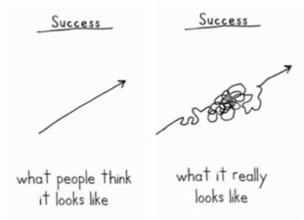
 I took away from that day that an authentic leader isn’t afraid of failure, they are real people who have worked hard, respect those around them and are dedicated to making a difference.

         (Blodget, 2012)

The last day of the leadership Academy took place via a zoom call due to the ongoing Covid-19 pandemic. Despite the fact we were not together in the same room, it didn’t take away any of the excitement or engagement of what the day was to hold. We were told to ‘take and provide opportunities’ which is exactly what we were doing! Taking in every ounce of information and experience that we were being let into and it was great. 

Each one of us was thriving and bouncing off each other’s enthusiasm and drive to be a better, more involved and influential leader. We heard stories of both struggle and success, each as inspiring as the other, proving that hard work, failure and learning from mistakes pays off when you have the right intentions, focus, grit and time investment. 

I thoroughly enjoyed my experience with the leadership Academy. The confidence I have in myself has grown dramatically and I know now that I will get there, it will not be easy but with the right tools, knowledge and opportunities that I take and create, I can be a great leader that will accomplish more than I could have ever imagined.

Thank you to everyone who took time out of their busy schedules to come and speak with us, to the new friends I have made who support me when I need it and to Beryl Mansel for the opportunity overall.

I will leave you with a link to my favourite leader in the world who I listen to, read about and learn from whenever I need encouraging and reminding that

I’m no different to anybody else and I’m able to do anything that I put my mind to, Michelle Obama.   https://www.youtube.com/watch?v=EIsf2p9iOsk&t=6s

(Student Leadership Academy, 2020)

References

Blodget, H. (2012, April 24). What People Think Success Looks Like Vs. What It Looks Like. Retrieved from Business insider: https://www.businessinsider.com/what-success-looks-like-2012-4?r=US&IR=T

Student Leadership Academy. (2020, July 6). Student Leadership Academy. Retrieved from Twitter: https://twitter.com/SWANSLA/status/1280054925871976448

by Brooke Lewis-Richards, Mental health Nursing Student (2020 cohort).

Can I reinvent my Leadership Skills? by Tracy Lewis Mental Health Nursing Student

Everyone has a story to tell, and this is mine.

Has leadership changed for the better? Yes, it most definitely has gone are the days when real leaders sit behind desks and shout demands as they did in my day! Having previously developed my leadership skills during the ’90s in Cardiff’s retail clothing sector, my skills appeared somewhat old fashioned, as my sons would say from the black and white days! 

On my first day of the leadership course, an alien name of Emotional Intelligence was introduced to me, and I remember thinking this would be the current ‘how to improve yourself’ trend. However little to my knowledge, I would soon realise that Emotional Intelligence was about to become my new best friend – sorry, step aside Beryl.

During the first day of the leadership course, one of the topics covered included Emotional Intelligence. Never have I given this much thought, which does explain a lot of questions! I was dubious at first and did not see it as a relevant topic in leadership. However, it was not until I met my Coach through the leadership programme that she hit the nail on the head and talked to me about Emotional Intelligence. It truly hit home how and why this was such an important subject and not overlooked. My leadership mentor encouraged me to research Emotional Intelligence and guided me on a continuous journey of reflection, and what a breakthrough this has been for me. 

Understanding Emotional Intelligence taught me to listen better and to think a little longer before I speak. I have learned that both my words and body language impact people around me far more than I realised. Emotional Intelligence is a skill that will no doubt take years to develop, but I am working on it, it is just practice and perseverance until it becomes a habit. I want people to see the good in me and so having good Emotional Intelligence has helped me show people that I care. I also identify with those who also have good Emotional Intelligence and so relationship building has become so much more exciting and somewhat more comfortable.

As suggested by Mansel (2019), Emotional Intelligence goes hand in hand with leadership. It is a partnership whereby you cannot have one, without others—having good interpersonal skills that can separate leadership to a higher platform of successful leadership and rewarding teams and individuals with positive outcomes and more opportunities.  

Moving forward to today, I am still practising my Emotional Intelligence, I try my best every day to keep Emotional Intelligence at the forefront, so it becomes a lifelong habit. I hope that by displaying positive Emotional Intelligence, other people can learn and embrace to do the same. There is so much information on emotional Intelligence online, and I would be happy to help others by promoting literature and resources on social media. 

The Best Way to Gain Self-Confidence is to Do What You are Afraid to Do.’ Anon.

Placements have provided the perfect platform to practice this, and so far, I have received much positivity towards dealing with such events, and it gives me hope for my future. Keeping a journal of reflection enables me to pause and evaluate my circumstances; replaying events will allow me to learn about myself. Understanding how I respond to events and situations will eventually differentiate how other people perceive me. All thanks to my leadership days in Swansea, I can reinvent my leadership skills.

References

Mansel, B. (2017). Emotional Intelligence is essential to leadership. Nursing Times. Vol31, no21.

Rolfe, G., Freshwater, D. and Jasper, M. (2001). Critical reflection in nursing and the helping professions: a user’s guide. Basingstoke: Palgrave Macmillan.

Me, Myself and Us: A Journey into Leadership

by Sarah Davies

I made the decision to try and return to University to fulfil a dream of becoming a nurse at the age of 34. I dropped my hours to part time gained a place on an Access course, applied to Swansea University and began my journey to gain the qualifications and expertise needed to begin my dream to become a nurse. I knew University life would offer many opportunities and the Student Leadership Academy did not disappoint. 

Beryl Mansel (Director of the Student Leadership Academy) came and spoke to my cohort in St David’s Park (SDP) a week before the deadline for the Leadership Academy applications closed. Knowing how I will never have these opportunities given to me again, I decided to apply and though some stroke of luck I managed to gain a place in the academy. This gave me a feeling of opportunity and I was left excited at the prospect of learning something different and meeting new people.

Karen, my buddy and I during our first meeting in St David’s Park Campus

During the wait for the first two sessions, I was introduced to Karen who like me was a mature student and the only student from SDP that would be attending and the prospect of not knowing anyone there or where I was actually going in Swansea was quite daunting. However, the meeting with Karen relaxed me. We exchanged telephone numbers and she was ready and waiting for any questions, concerns and panics I was going to have. 

The day arrived of our first meeting together as the Swansea Leadership Academy Cohort of 2020 and after finding the car park, I wondered onto the campus very aware I was wearing my Scarlets coat and bracing myself for heckling from rival Osprey supporters! I realised I was very early, but this is a trait in myself, I always prefer to be early than late I consider this a strength! I was not the only early bird. I met a lovely medical student who I discovered had overcome many things in her life to get where she is. Her story really got to me and my admiration for her was bubbling over as I realised just how lucky I was to have been given this opportunity. As the room filled up, I found designated table, took my seat and decided to introduce myself to others on my table. 

Before we knew it, the day was about to begin. We were welcomed by Beryl over a pre-recorded message as she and a few of the previous cohorts’ students were on the way to London as the Student Leadership Academy had been nominated for a Student Nursing Times Award. We worked through an icebreaker and were introduced to Emotional intelligence. I had never heard of the term Emotional Intelligence before and the subject intrigued me. As the morning went on, I discovered I already possess some of these qualities, but the thing I will take the most from the mornings exercises is that what you say can impact a person more than what we can be aware of. It is easy to criticise. However, to give a compliment and accept a compliment takes a different skill set. Generating positivity from any situation good or bad is important to keep moral and to learn from mistakes. 

Lunch was delivered and this gave us a chance to fill our stomachs and network with the many influential people in the room. Being way out of my comfort zone, I found comfort with a fellow student who was an Osprey supporter and the conversation quickly turned to my other passion rugby. After lunch we were greeted by James Moore who invited us to complete a Myers Briggs personality test. This exercise made me look at myself in a different way and I have learnt from this. The exercise brought us as a cohort closer, with us all enjoying, laughing, and getting to know each other. 

Following on from James was Julia Pridmore who shared her journey with us, I must say her story was truly inspiring, and her final actions really did hit home, when she pulled off her cardigan to show a purple student scrub top underneath, adding that ‘you never stop learning’. I found her story and her view on life, breath taking and feel very privileged that she chose to share her story with us. With this we ended the day with reflection and left. 

Members of the Student Leadership Academy 2020 cohort

The second day upon us, I left a little later as I knew the roads better and not so worried about getting lost and a quick dash through Singleton park and the grounds not to be spotted by the rivals’ supporters. Debbie Rowberry began the day with her journey with the use of Banksy, she related the works of Banksy to her journey and what the interpretation of his art meant to her. Deborah’s journey again was inspiring, and her wealth of knowledge and experience defiantly shone through. With Beryl back from her journey to London, we talked about our self-confidence, striking a power pose and the ability to learn to accept a compliment. Beryl also shared her journey which was again was very inspiring, to come from the area I am from and to achieve so much really instils that the world really my oyster and we can achieve anything if we want it enough. 

The two days were really amazing and made me look at myself in a completely different light. As we bid our farewells we could only look forward to our final day in March. A few weeks later, we received an email from Beryl telling us who our coach was. I was absolutely delighted to discover it was Julia Pridmore and I was excited to discover what advice and knowledge I could gain and learn from her. 

However, no one could predict what was going to happen, COVID-19 managed to grip the whole world and affect us all. Our third day was postponed, meetings with coaches had been changed from face to face to Zoom calls, our placements came to an abrupt stop and our lives were thrown into a turmoil of home-schooling, zoom lectures, 30 minuets of exercise a day and shopping like a ninja trying to always keep a distance of 2m. 

With new guidelines in place, I had a zoom meeting with Julia, and she helped me organise my life, prioritising those things that were making life harder, juggling a child, lockdown, university work, my daughter’s schoolwork, food shopping for myself and the nearest and dearest and making sure our mental health was not suffering on my own was proving too much, but Julia helped me more than she realises. 

Our third and final day was to be held over Zoom. The disappointment of sitting in front of a screen all day not seeing my peers in real life and the added fact I would have to make my own lunch (I mean who does not appreciate a free lunch) was proving a difficult hurdle to overcome.

But, how wrong I was!

The feeling of negativity that was so prominent was taken over by added opportunities that we may not have had if we had been in person. Beryl had organised Ismalia De Sousa to join us via zoom from Canada! Her story and journey were more than inspiring. She shared her roots with us, no stone left unturned. She really has worked hard to be where she is, and it was humbling, and she is an inspiration to us all. 

We also had the privilege to be introduced to Dr Sarah Tobin, who discussed her journey and what it means to her to be a leader. As the other speakers she again was just truly inspiring, Sarah highlighted that compassion was not optional in our chosen careers but essential, and not only compassionate with the patients but, each other. 

What I have gained during my time with the Student Leadership Academy is mindfulness. Being mindful of others and their feelings, be it a patient who is struggling with a diagnosis or a simple task and with my peers who are having a difficult day. I believe it will be important to me to see and notice changes in patients and peers and take the time to listen, or throw a word of advice, even coax a fellow peer to the staff room to strike a power pose when they are lacking in confidence. I believe it is important to realise we are all different, we deal with different emotions and feelings and not one person is better than another. By looking at each other holistically we can help and support those around us. 

My daughter and I, in our beloved Parc Y Scarlets, de-stressing.

Finally, the rugby pitch side-line is where I go an unwind and destress and I have mentioned my passion for rugby within this blog and I can see so many similarities in what I have learnt from the Student Leadership Academy and rugby. The old saying of there is no I in team rings true. However, I IS important, we lead from any area of the pitch, if you have the ball, you are in the lead and the direction we take the ball will inspire others to follow. Positivity is an important asset to possess and is key to any successful team, be it a rugby team, ward team, community team or cohort of students. We are all a part of a team and without positivity the team will suffer defeat from negativity. No one learns from negativity, but what we do how we view the negative is the difference between winning and losing. 

By Sarah Davies Adult Nursing Student (2020 cohort)

My Leadership Journey through a World Pandemic

By Zoe Dixon 

My Leadership Background

I have never seen myself as a leader, but I have experienced leadership through my sport and degree in Sports and Exercise Science of leadership development. It is an experience that I would like to build on and apply to my new career as a nurse. Through my sport, I am a qualified windsurfing coach, and I have benefitted myself from being part of the UK Olympic training scheme. Through this training, I have developed an ability to lead people in a sporting context. However, I have had no experience in leadership within a professional context and being a student nurse. I have also never had any formal training in leadership until the Student Leadership Academy. 

Promotion photo for This Girl Can campaign

My Journey

My journey started when Beryl Mansel introduced us to Swansea University Student Leadership Academy during the first few weeks of starting the Adult Nursing programme. The first weeks or even month of starting Adult Nursing, I felt completely overwhelmed as it was all completely new to me. When Beryl came along and spoke to the cohort about taking part in the leadership academy, I initially thought I couldn’t do that. It’s for people who are outgoing and those who already have experience in leadership roles. So I didn’t apply. 

However, a further email was sent out advertising it again with a link to apply. It was then I thought what have I got to lose? Therefore, I applied thinking I would not get offered a place, I was wrong. I was so shocked that I had been accepted to join the Student Leadership Academy, so I decided to grasp this opportunity and throw myself into the experience. 

The first day of the conference, I felt incredibly shy, walking to campus not sure what to expect and who else would be joining me. I arrived and sat down at my designated table, greeted by everyone and a nice cup of tea and biscuits. I started introducing myself to the rest of the people on my table, getting to know what areas they are studying in, paramedic science, mental health nursing, midwifery, to name a few. They were so lovely and friendly, making me feel comfortable. I made the right choice of applying to the Student Leadership Academy (SLA). 

Once everyone was settled Beryl gave an introduction to what the next two days of the conference would entail. I was excited to listen and engage in the activities and talks from all the inspiring people. In the morning, we spoke about Emotional Intelligence the ability to monitor my emotions as well as other people’s emotions and tell apart the different emotions. Emotional intelligence consists of five elements; self-awareness, self-regulation, motivation, empathy and social skills. 

My Leadership Coaching

I was lucky enough to be Coached by a Nursing Officer. My leadership Coach has had an exciting career, now working in the Welsh Government. Due to the pandemic and lockdown, my meetings with my Coach was carried out over the phone. To start with, this made me even more nervous about meeting someone in the Welsh Government. However, my Coach soon made me feel at ease. We spoke about the opportunities I will come across during my training and my career.  My coach also directed me to important policy drivers such as Delegation guidance, A Healthier Wales, NMC social media guide. The second meeting I had with her, we spoke about the current COVID-19 situation, what the hospitals and Government are doing to help fight and cope with the virus. We also talked about what assignments I was currently working on, namely, Health Promotion. I was directed to two great resources, Making Every Contact Count and the Well-Being of Future Generations (Wales) Act 2015. 

In my third meeting with my Coach, we spoke about how much my self-confidence had increased.  Being part of the SLA and starting bank shifts within the hospital certainly made a vast difference. We discussed the assignment I had recently submitted, which was about Adult Obesity in Wales. This led us to a conversation about health professionals’ diet within the workplace. During most of my placements, the majority of staff would buy food from the canteen; a fully cooked breakfast; for lunch curry and chips or the days offering. During night shifts nurses would tend to eat dinner before they came to work, but before midnight, they would go to the canteen and buy pie and chip and consume sweets throughout the night. I also found that they drank a lot of tea and coffee throughout all shifts. My Coach and I discussed what can lead to health professionals being overweight: quick and easy food; not enough time to prepare food from home; cheap canteen food; lots of vending machines around the hospital; stressful environment. 

My Coach tasked me with asking the health professionals, why they go for a cooked breakfast during work? If they eat a cooked breakfast when they are at home? To begin these discussions would help to build my confidence even further and also was an opportunity to educate my colleagues on healthy eating during a shift. During my next shift and break, I engaged with the health professionals in a discussion around healthy eating. They soon realised the need to be mindful of an unhealthy diet and accessibility of canteen food.  The conversation led to my colleagues stating that they will consider their diet during shifts and try to choose the healthier options. 

Reflecting upon this experience with Swansea Leadership Academy, I have developed my confidence to begin a conversation. I have also gained an understanding of how to be a good leader. Also, what leadership roles there are within the NHS. I have found this experience eye-opening, and now I have to confidence to approach other health professionals to discuss patient care or ask them to explain why they are doing such tests on patients and what they are hoping to find. The Swansea Leadership Academy has been a life-changing experience I will never forget. 

Thank you Beryl.

Zoe Dixon Adult Nursing Student (2020 cohort).